Review · 19 Jul 2026
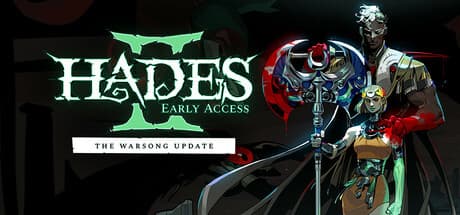
Hades II
More of everything, held together by writing that still has no real competition in the genre.
PowerManiacWriter · Action, character action, soulslikesafter 44 hours
Supergiant Games · Action roguelike · PC · released 25 Sept 2025 · Both escape routes cleared, most weapon aspects unlocked
Played 16% longer than the game usually takes to finish.
Tested on RTX 4070 · 1440p · high preset · 120 fps
The hardest thing to do in a sequel is add without diluting. Hades II adds two directions of travel, a resource-gathering layer, a spellcasting system and roughly double the cast, and it very nearly gets away with all of it.
Melinoë is not Zagreus
That matters more than it sounds. Zagreus was a sulking teenager storming out of the house; the comedy came from how little the underworld took him seriously. Melinoë is on a mission she was raised for from birth, and the tone shifts with her — quieter, more formal, and far more interested in what everyone else has been carrying while she trained.
Supergiant's writing remains the reason to be here. Every character has hundreds of lines, they remember what happened last run, and relationships change across dozens of hours in a way almost nothing else in games bothers to attempt. I kept dying on purpose to hear more of it. That is a strange compliment and I mean it as one.
- Runs
- 147
- Favourite weapon
- Sister Blades
- Lines heard twice
- Almost none
The Omega system works
Holding a button to charge an attack into a stronger version, at the cost of magic, sounds fussy on paper. In practice it gives every fight a rhythm the first game did not have — you are managing a bar, choosing when to commit, and getting punished for holding too long in the open. It also makes the two surface and underworld routes feel genuinely different rather than reskinned.
Where it slips
The gathering. You now collect materials in the hub and out on runs, and it is the one system that feels bolted on to extend the middle of the game. There were several hours where my progress was gated not by skill but by whether I had picked up enough of a specific plant. In a game this well paced, that stands out badly.
The second route also takes a long time to open up, and until it does, the run variety is thinner than the first game at the equivalent point.
The hub is doing more work than it looks like
Supergiant's real structural innovation across both games is that failure returns you somewhere with things to do. The Crossroads is larger and busier than the House of Hades was, and after every death there are three or four conversations that have advanced, an incantation to fund, a plot to gather, a relationship that moves one notch.
That is why the death loop does not grind. You are never repeating a run to get further; you are repeating it because six people have something new to say and one of them has finally decided to tell you what happened to Chronos. It converts a roguelike's core frustration into a delivery mechanism for the thing the studio is best at.
The gathering system is the exception and the reason it stands out so badly: it is the one hub activity that asks for time and gives back a number.
The verdict
Bigger than Hades, not tighter than it. If you want the sharpest version of this design, the original is still it. If you want to spend forty hours with the best-written cast in the genre, this is the one, and the fights are better besides.
Accessibility
- Subtitle size adjustable, speaker names always shown
- God Mode grants escalating damage resistance per death, on by choice at any time
- Full remapping; the Omega hold can be set to toggle
- Screen shake and flashing effects both reducible
Checked during play, not from a feature list. Tell us what is missing and it gets added.
❦