Review · 26 Mar 2026
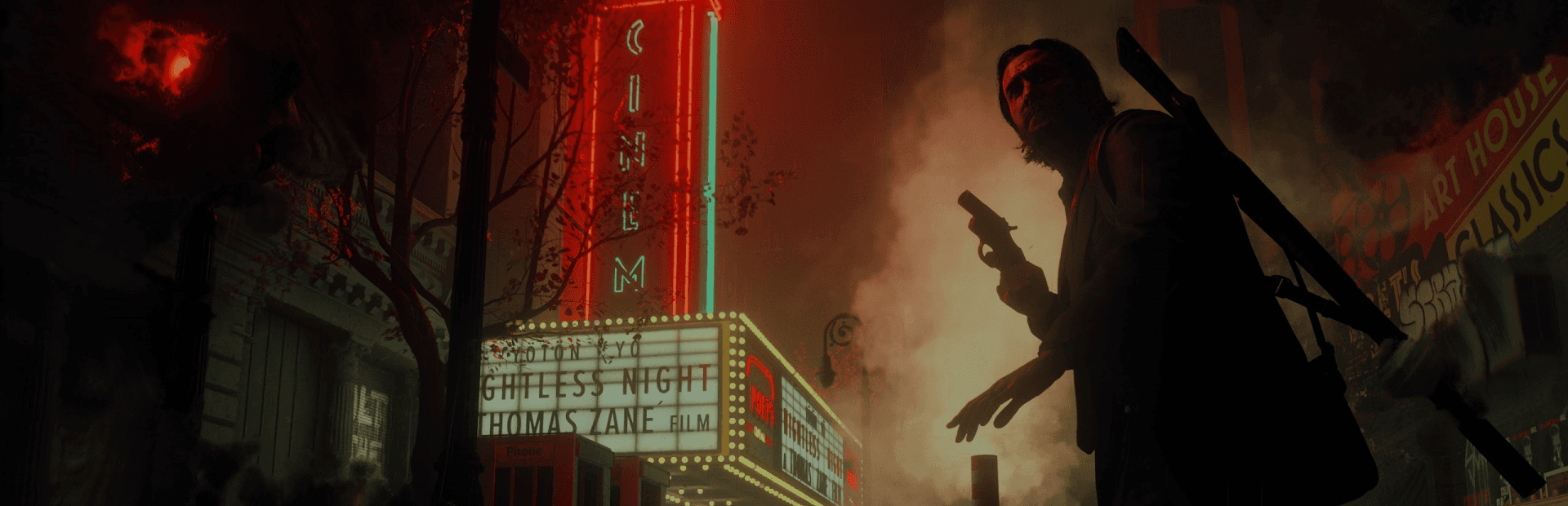
Alan Wake 2
A game about writing that is genuinely about writing, and the only survival horror where the boldest sequence is a musical.
DoukaWriter · Horror, adventure, narrative gamesafter 29 hours
Remedy Entertainment · Survival horror · PC · released 27 Oct 2023 · Both campaigns, all Nursery Rhymes, one New Game Plus chapter
Played 45% longer than the game usually takes to finish.
Tested on RTX 4070 · 1440p · DLSS Quality · 60–70 fps, ray tracing off
Thirteen years is a long time to wait for a sequel to a game that was, honestly, fine. What arrived is not a bigger version of the first Alan Wake. It is Remedy at the height of its confidence, making the strangest thing a major publisher has funded this decade and refusing to explain itself.
Two campaigns that read each other
You alternate between Saga Anderson, an FBI agent working a ritual murder case in the Pacific Northwest, and Alan, still trapped in the Dark Place, writing. The structure lets you switch at will after the opening hours, and the game is built so that scenes in one campaign reframe scenes in the other. Doing them in different orders produces different readings, not different content — a distinction most games with this structure get wrong.
Saga's Mind Place, where you pin evidence to a board, could have been a busywork menu. Instead it becomes a device for making you articulate a theory before the game confirms it, and it is the best interpretation of detective work since the original Frogwares Holmes games.
- Campaigns
- Both, plus the epilogue
- Hours in the Dark Place
- ~13
- Times the game changed form entirely
- At least four
The set pieces earn the word
There is a chapter that becomes a live-action musical, in full, with choreography, and it is neither a joke nor a gimmick — it is the emotional centre of Alan's arc and it works. Another turns a talk show into a confession. A third rewrites a location around you as you walk through it. Remedy has always liked mixed media; this is the first time it is load-bearing rather than decorative.
Where it slips
The combat. It is fine — flashlight, dodge, shoot — and it is fine for twenty-nine hours, which is too long for fine. Ammunition scarcity produces tension early and tedium later, and the enemy roster barely expands after the first campaign's midpoint. In a game this inventive everywhere else, the shooting is the one system nobody appeared to want to reinvent.
The Dark Place sections also repeat their central trick — reshaping a small area with a light switch — often enough to become a chore before the end.
The verdict
The most ambitious game on this site and not the best-playing one. Twenty-nine hours, of which perhaps six are mechanically dull and twenty-three are unlike anything else.
Play it in the dark, in long sittings, with the volume up. It rewards attention more than skill.
Accessibility
- Subtitle size and background adjustable; live-action segments are captioned
- Full remapping and hold-to-toggle for aim and sprint
- Strobing and flashing in several sequences with no reduction option
- Combat difficulty adjustable independently of puzzle hints
Checked during play, not from a feature list. Tell us what is missing and it gets added.
❦