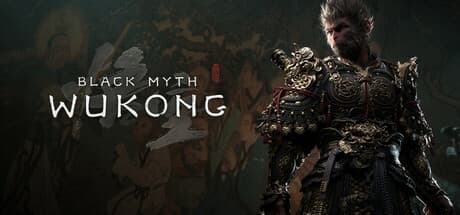
Review · 13 Jan 2026
Black Myth: Wukong
Spectacular boss design carried by a world that keeps forgetting to be a world.
PowerManiacWriter · Action, character action, soulslikesafter 58 hours
Game Science · Action role-playing · PC · released 20 Aug 2024 · All six chapters, secret ending, most optional bosses
Played 45% longer than the game usually takes to finish.
Tested on RTX 4070 · 1440p · DLSS Quality · 60–75 fps, heavy drops in chapter three
There are somewhere north of eighty bosses here and perhaps fifty of them are worth fighting, which is a hit rate almost nothing in this genre achieves. The problem is what happens between them.
The bosses are the game
Game Science's talent for animation is not in question. These fights have weight, readability and a specific physicality — enemies wind up, commit, recover, and telegraph in ways that reward pattern recognition rather than reflex. The transformation system, which lets you become defeated enemies with their movesets intact, means a fight you struggled with becomes a tool you carry into the next.
The best of them, in chapters four and six, are as good as anything From Software has made. Several are better shot than most films.
- Bosses defeated
- 79
- Deaths
- 446
- Transformations used regularly
- 4 of 9
The world is a corridor pretending otherwise
Between fights you walk. The environments are beautiful and almost entirely non-interactive — invisible walls in places that visibly should be walkable, waist-high rocks that stop you, geometry that reads as a path and is not. For a game so clearly influenced by Souls, it has none of the interlocking level design that made those worlds legible, and the map screen is absent entirely because there is nothing to map.
Chapter three is the exception and the argument for what this could have been: an actual explorable region with secrets that reward looking. It is also where the frame rate falls apart.
Where it slips
Build variety is thin. Three staff stances, a handful of spells, and a huge inventory of items whose numbers barely move the fight. Sixty hours in I was playing more or less the character I had at hour ten, with better numbers. In a genre defined by build expression that is a real gap.
The story also assumes familiarity with Journey to the West that most of its audience does not have and does not accommodate that at all — characters arrive with history the game will not explain.
The verdict
Buy it for the bosses. Accept the corridors. Fifty-eight hours here contains perhaps twenty-five hours of genuinely exceptional combat and thirty hours of walking toward it through nice scenery.
The sequel, if it fixes the space between the fights, will be extraordinary.
❦